










NASA Moon Base Strategy 2026 is shaping the future of lunar exploration as NASA prepares new Moon missions, lunar habitats, and long-term plans for a permanent human presence on the Moon.
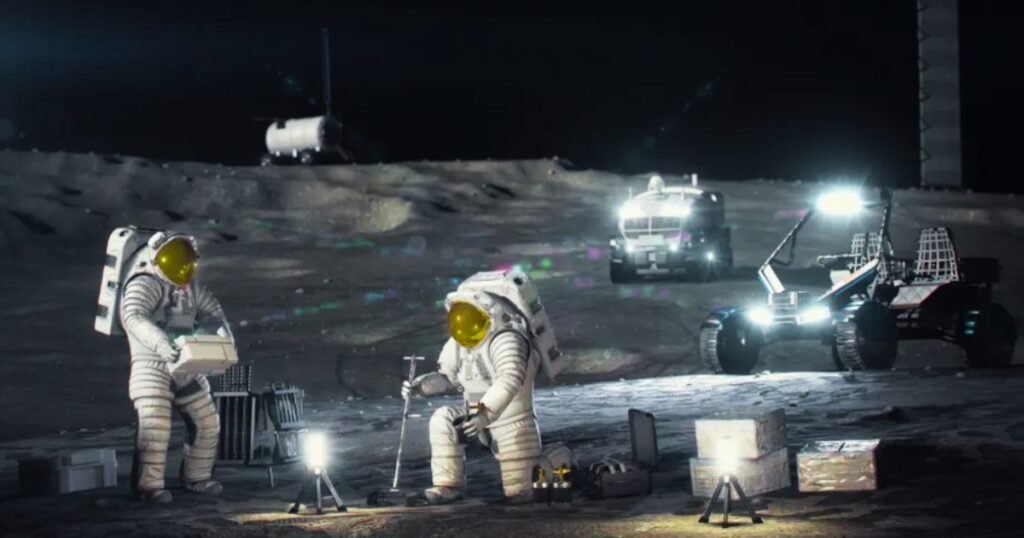
The idea of humans living on the Moon once sounded like pure science fiction. Today, that dream is slowly becoming a reality. NASA is now preparing to unveil fresh updates about its long-term Moon Base strategy, signaling a major turning point in the future of space exploration.
On May 26, 2026, NASA leaders will host a major media briefing from Washington, D.C., where they are expected to discuss new mission goals, lunar infrastructure plans, and partnerships designed to support a permanent human presence on the Moon.
This is not just another Moon mission announcement. It represents a larger vision — one where astronauts may eventually live and work on the lunar surface for months at a time while preparing for even bigger journeys into deep space.
NASA Preparing for a New Era of Lunar Exploration
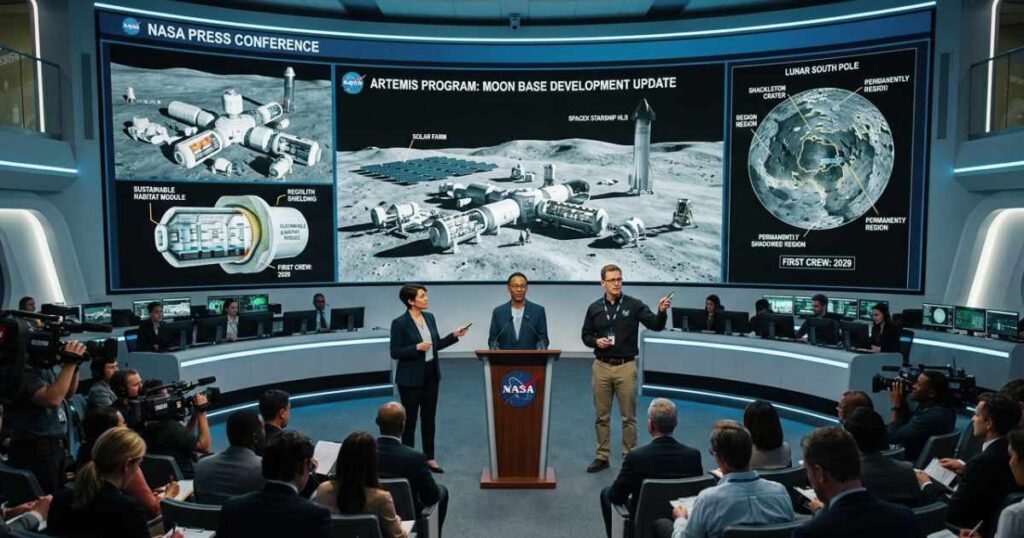
NASA’s upcoming conference is expected to focus heavily on its evolving Moon Base initiative. The agency has already made significant progress through its lunar exploration programs, but officials say the next phase will move beyond temporary missions.
Instead of short visits, NASA wants to create systems that allow humans to remain on the Moon for extended periods. Scientists, engineers, and astronauts would use these facilities to conduct experiments, test technologies, and study how humans can survive far from Earth.
The agency believes the Moon could become the foundation for future space operations.
During the briefing, NASA officials are expected to explain how the agency plans to strengthen international cooperation and expand partnerships with private aerospace companies. Experts believe these collaborations could speed up technological development while reducing operational costs.
Focus on the Moon’s South Pole
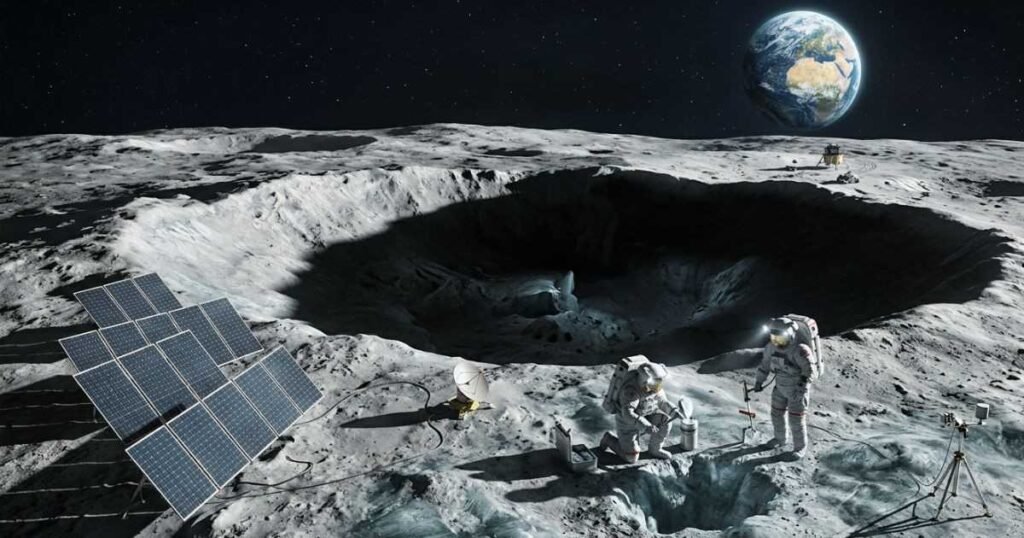
One of the biggest reasons NASA is interested in the Moon’s South Pole is because of its scientific potential. Unlike the regions explored during the Apollo missions decades ago, the South Pole contains permanently shadowed craters that may hold frozen water deposits.
That water could become one of the most valuable resources in future space exploration.
Scientists say water ice on the Moon may eventually be converted into oxygen for breathing and hydrogen for rocket fuel. If successful, future astronauts may no longer need to carry every essential resource from Earth.
The South Pole also receives long periods of sunlight in certain areas, making it an attractive location for solar energy systems that could power lunar habitats and research stations.
Because of these advantages, several nations are now targeting this region for future missions, increasing global competition in lunar exploration.
NASA’s Vision Goes Beyond the Moon
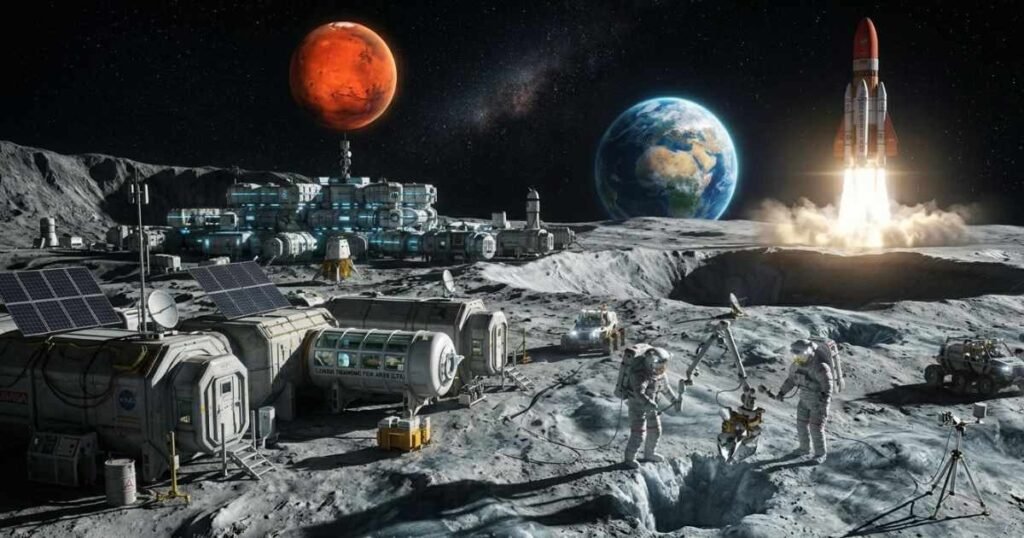
NASA’s lunar plans are deeply connected to its broader exploration goals. The agency has repeatedly stated that the Moon is not the final destination. Instead, it serves as a stepping stone toward future human missions to Mars.
Living and working on the Moon will help scientists better understand the physical and psychological challenges astronauts may face during long-duration space travel.
Future lunar missions could help NASA test:
- Long-term life support systems
- Radiation protection technology
- Deep-space communication networks
- Advanced robotic operations
- Surface transportation vehicles
- Sustainable energy systems
Testing these technologies on the Moon gives researchers a safer environment to solve problems before humans attempt the much longer journey to Mars.
Private Companies Becoming Key Partners
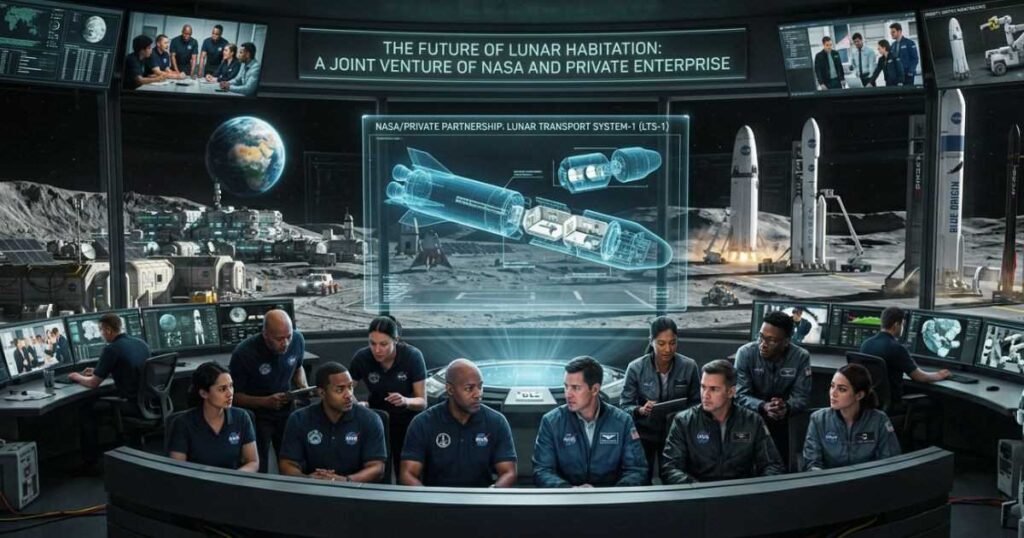
Modern space exploration is no longer handled only by governments. Private companies are now playing a major role in developing rockets, landing systems, and space infrastructure.
NASA has increasingly partnered with commercial aerospace firms to accelerate innovation. Companies like SpaceX and Blue Origin are already contributing to next-generation lunar transportation systems and exploration technology.
Industry experts believe these partnerships are helping transform space exploration into a more sustainable and economically viable industry.
Commercial involvement could also create new business opportunities in areas such as robotics, communications, manufacturing, and lunar resource extraction.
Moon Base Could Open a New Space Economy
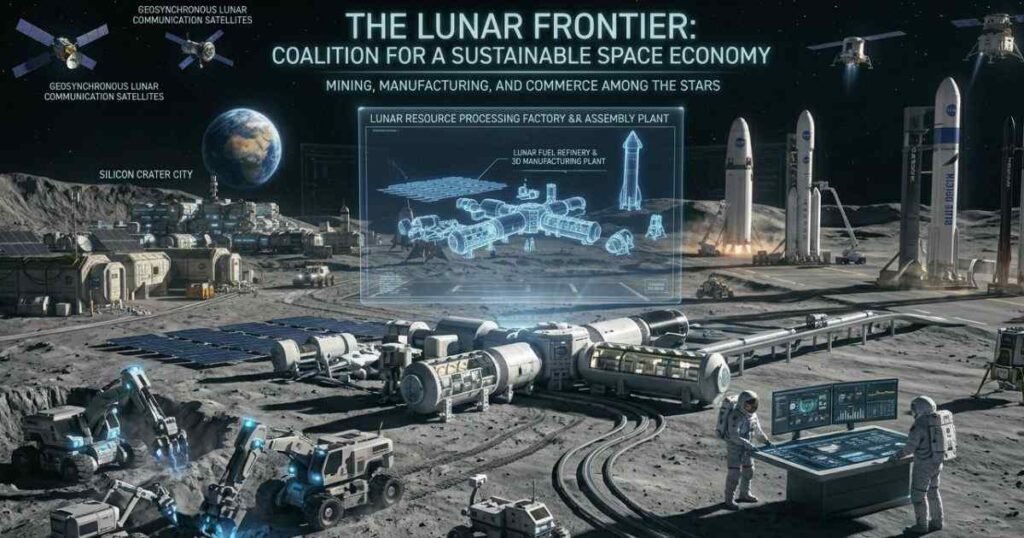
NASA officials have suggested that the Moon Base initiative may eventually support a growing lunar economy.
As technology advances, the Moon could become a hub for scientific research, commercial operations, and international collaboration. Future industries may focus on extracting lunar materials, building infrastructure, and supporting deep-space missions.
Here’s how different industries could benefit from lunar development:
| Sector | Possible Future Use |
| Robotics | Automated lunar construction |
| Aerospace | Deep-space transportation systems |
| Energy | Solar power generation on the Moon |
| Mining | Resource extraction from lunar soil |
| Communications | Space-based internet networks |
Some analysts believe the global space economy could expand dramatically over the next two decades as lunar exploration becomes more advanced.
Public Excitement Around Space Exploration Growing Again

Interest in space exploration has increased significantly in recent years. Rocket launches, Mars rover discoveries, and private astronaut missions have once again captured worldwide attention.
NASA’s Moon Base strategy is expected to generate even more excitement because it represents a long-term vision rather than a single mission.
Many scientists see this period as the beginning of a new space age — one driven by innovation, international cooperation, and advanced technology.
The agency also hopes these missions will inspire younger generations to pursue careers in science, engineering, robotics, and aerospace technology.
Why This Announcement Matters
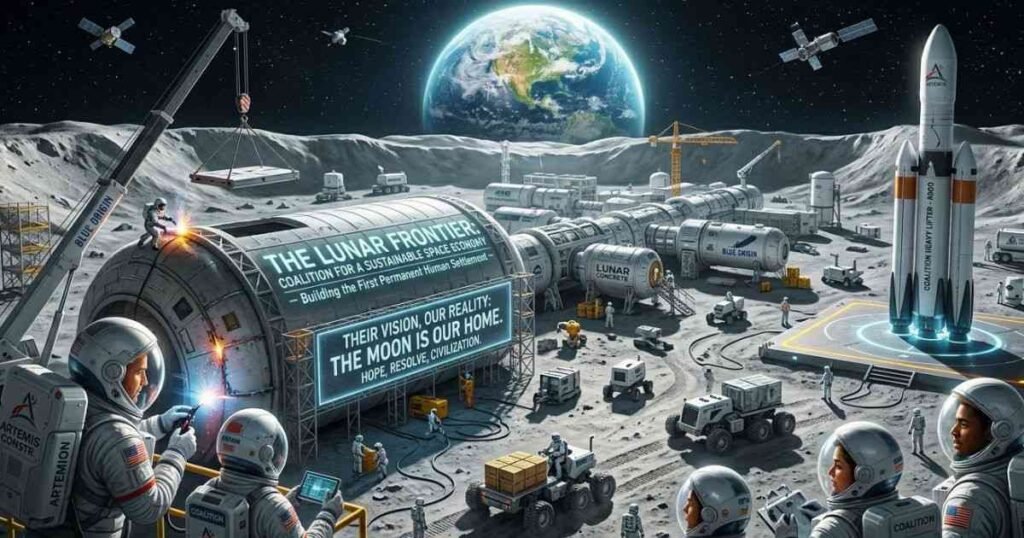
The upcoming NASA briefing could provide one of the clearest looks yet at how humanity may eventually establish a lasting presence beyond Earth.
For decades, the Moon symbolized exploration. Now, it may become a place where humans build research stations, develop advanced technology, and prepare for interplanetary travel.
If NASA’s plans move forward successfully, the Moon could become humanity’s first permanent home beyond Earth — a milestone that would completely reshape the future of space exploration.
Final Thoughts

NASA’s Moon Base initiative represents more than just another space project. It reflects a larger ambition to push human exploration farther than ever before.
The agency’s upcoming updates are expected to reveal how close humanity may be to building a sustainable future on the lunar surface.
While major technical challenges still remain, NASA’s long-term strategy shows that living on the Moon is no longer just a fantasy from movies and books. It is becoming a serious scientific and technological goal that could define the next generation of human achievement.
FAQ Section – NASA Moon Base Strategy 2026
1. What is NASA’s Moon Base initiative?
NASA is developing a long-term lunar exploration program designed to create a sustainable human presence on the Moon. The initiative focuses on scientific research, technology testing, and preparation for future Mars missions.
2. Why is NASA focusing on the Moon’s South Pole?
The Moon’s South Pole may contain frozen water ice inside permanently shadowed craters. Scientists believe this water could eventually be used for drinking water, oxygen production, and rocket fuel for future missions.
3. When will NASA reveal the updated Moon Base plans?
NASA is scheduled to share new updates about its Moon Base strategy and future lunar missions during a media briefing on May 26, 2026.
4. Will astronauts permanently live on the Moon?
NASA’s long-term goal is to develop systems that allow astronauts to stay on the Moon for extended periods. While permanent settlements are still in development, the agency is working toward sustainable lunar living capabilities.
5. How does the Moon Base help future Mars missions?
The Moon will act as a testing ground for technologies needed for deep-space travel. NASA plans to test life-support systems, radiation protection, habitats, and astronaut endurance before sending humans to Mars.
6. Which companies are working with NASA on Moon missions?
Private aerospace companies like SpaceX and Blue Origin are helping NASA develop advanced lunar transportation systems and exploration technology.
7. What technologies will be used in the Moon Base?
The Moon Base may include advanced habitats, solar power systems, robotic vehicles, communication networks, scientific laboratories, and resource extraction technologies.
8. Why is the Moon Base important for humanity?
The project could help humans become a multi-planetary civilization by expanding scientific discovery, improving space technology, and opening new opportunities for future space exploration and economic growth.
9. Can ordinary people watch NASA’s Moon Base announcement live?
Yes. NASA plans to stream the event live on NASA+ and the agency’s official YouTube platforms.
10. Could the Moon Base create new jobs and industries?
Experts believe lunar exploration may create opportunities in robotics, aerospace manufacturing, mining technology, communications, and advanced energy systems in the coming decades.
News Source By: Chat GPT

Vikrant Singh is the Founder and Lead Editor of News US Media, where he covers U.S. news, sports, world affairs, and trending stories. With a focus on accurate reporting and in-depth research, he delivers timely, reader-friendly coverage that helps audiences stay informed about the latest developments in the United States and around the world. Through News US Media, he is committed to providing trustworthy journalism built on accuracy, credibility, and transparency.