









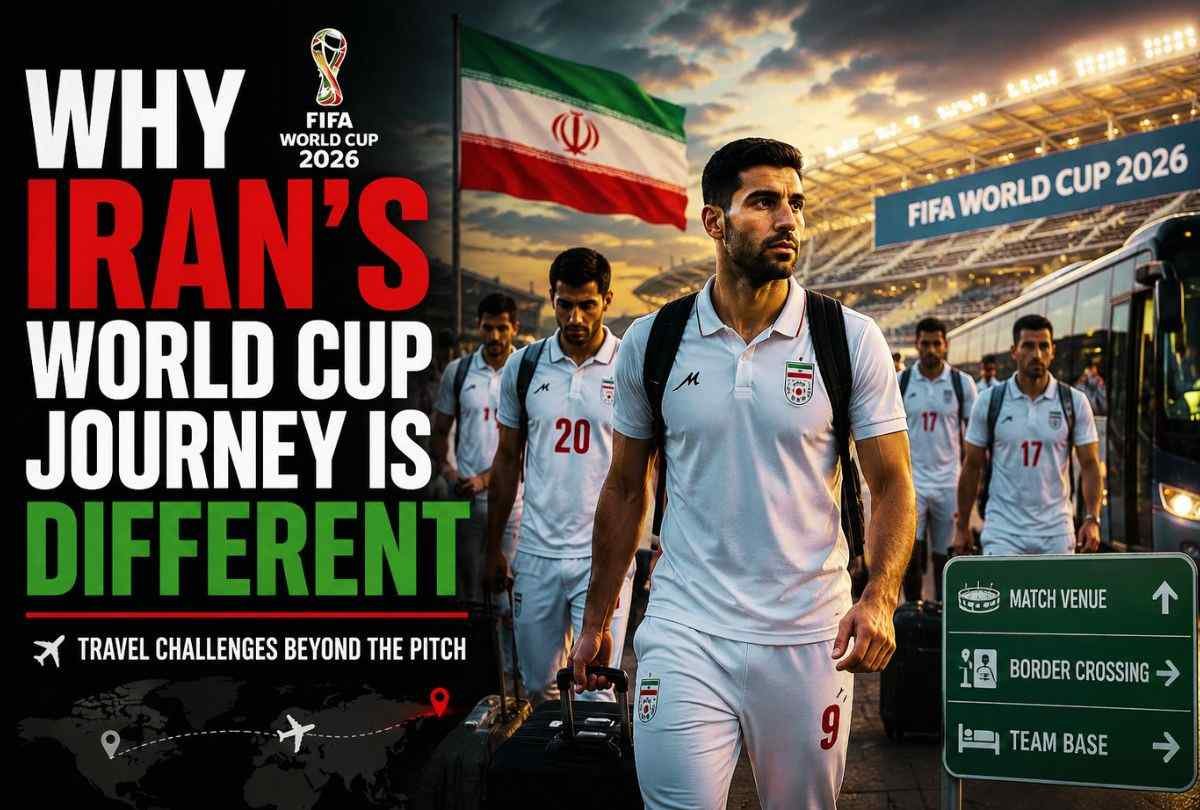
Why Iran World Cup Journey Is Different is a question many soccer fans are asking during FIFA World Cup 2026. While most teams are focused entirely on matches and training, Iran has faced additional travel concerns, logistical complications, and recovery challenges that have made its tournament experience unlike that of most participating nations.
Most World Cup stories begin with goals, tactics, and unforgettable moments.
Iran’s story is different.
After fighting back to secure a draw in its opening match of the 2026 FIFA World Cup, the conversation quickly shifted away from football. Instead of discussing formations or standout performances, many fans started talking about something far less glamorous: travel.
For most national teams, the World Cup is demanding enough. Players travel, train, recover, and prepare for the next opponent. That routine is part of tournament football.
Iran, however, appears to be dealing with an extra layer of challenges that few teams have had to face in modern World Cup history.
And that is what makes their journey one of the most unusual stories of the tournament so far.
A World Cup Campaign That Never Felt Normal
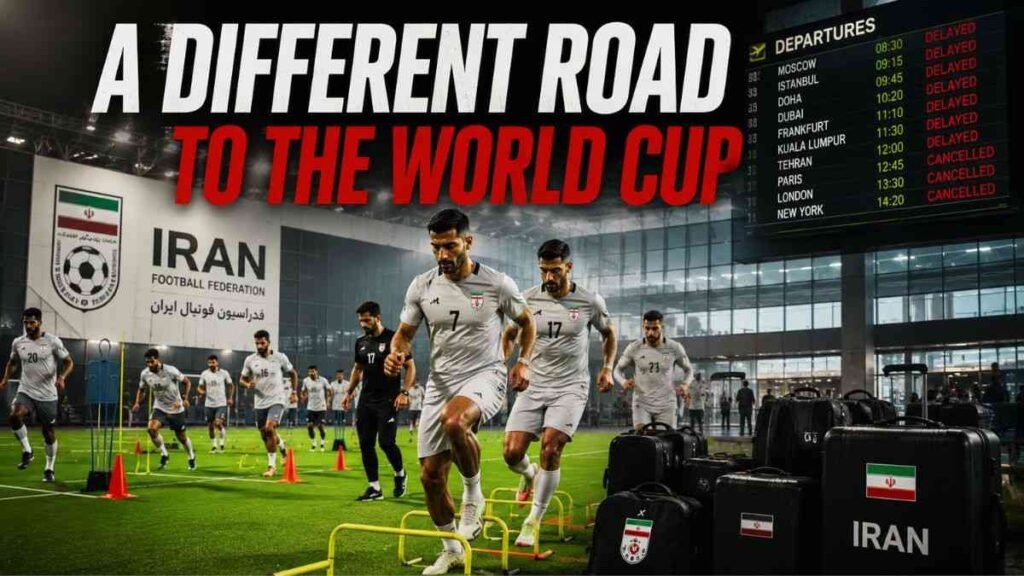
Long before the first whistle of the tournament, Iran’s preparation looked different.
While many countries spent months building a stable training environment, Iran’s plans changed repeatedly. Adjustments to travel arrangements, uncertainty around logistics, and the need to constantly adapt meant that preparation was far from ideal. Reports indicate that the team ultimately based itself in Mexico rather than operating like many other teams competing inside the United States.
For professional athletes, routine matters.
Recovery schedules, training sessions, nutrition plans, and sleep cycles are carefully managed. Even small disruptions can affect performance at the highest level.
That is why many observers believe Iran’s challenge extends beyond what happens on the field.
The Draw That Should Have Been the Main Story
When Iran stepped onto the field against New Zealand, the expectation was simple: focus on football.
The match delivered drama.
Iran found itself under pressure, responded with determination, and earned a valuable point in a competitive Group G battle. The performance showed resilience and character, especially considering everything happening around the team.
Under normal circumstances, that comeback would have dominated headlines.
Instead, discussion quickly moved toward what happened after the final whistle.
Football’s Hidden Battle: Recovery Time

One of the most overlooked parts of tournament football is recovery.
Fans watch ninety minutes on television, but players spend hours afterward receiving treatment, cooling down, rehydrating, and preparing their bodies for the next challenge.
That process becomes even more important during a World Cup, where matches arrive quickly and physical intensity remains extremely high.
Iran’s camp expressed concern that travel requirements immediately after matches could reduce valuable recovery time and place additional stress on players. According to multiple reports, the team expected more time before returning to its base but instead faced a faster departure schedule.
Whether that ultimately affects results remains to be seen, but it has already become a major talking point.
More Than a Sporting Challenge
Every World Cup team faces pressure.
Few teams face questions that extend beyond football itself.
Iran entered this tournament carrying significant attention because of wider international circumstances. That reality has created a unique environment where discussions about travel, movement, and logistics often receive as much attention as match results.
For players, the challenge is simple but difficult: block out everything happening around them and focus on the game.
That is often easier said than done.
Why American Fans Are Paying Attention

Many American soccer fans may not normally follow Iran’s national team.
Yet this story has attracted attention because it touches on a question every sports fan understands: competitive balance.
Should every team have the same opportunity to prepare?
Should recovery conditions be equal?
Should tournament logistics impact performance?
These questions go beyond any single nation. They speak to the broader idea of fairness in international competition.
That is why Iran’s situation has become a discussion point not only among Iranian supporters but also among neutral fans watching the tournament unfold.
The Mental Side of the Tournament
Physical fatigue is visible.
Mental fatigue is harder to measure.
Constant travel, changing schedules, and outside distractions can slowly affect concentration. Over the course of a month-long tournament, those small factors can become significant.
Elite athletes often talk about the importance of routine because routine creates stability.
When stability disappears, maintaining focus becomes another challenge entirely.
Iran’s players now face the task of staying mentally sharp while continuing their pursuit of a place in the knockout rounds.
Can Adversity Become Motivation?
Sports history is full of teams that used difficult circumstances as motivation.
Sometimes challenges create stronger team unity.
Sometimes adversity becomes fuel.
Iran’s opening performance suggested a group willing to fight for every result. Even when facing setbacks during the match, the team continued pushing forward and eventually earned a draw.
That mentality could become one of their biggest strengths moving forward.
If the squad can channel frustration into focus, they may become a dangerous opponent for anyone in Group G.
What Happens Next?
The World Cup rarely slows down.
There is little time to dwell on controversy because another match is always approaching.
Iran now faces the challenge of turning attention back to football. Fans will be watching closely to see whether the team can build on its opening result and continue competing for qualification.
The biggest question is no longer whether Iran belongs at the World Cup.
The answer to that was already earned on the field.
The real question is whether the team can overcome everything happening around the tournament and still produce its best football when it matters most.
Final Thoughts
Every World Cup creates a few stories that are larger than a single match.
Iran’s tournament journey is becoming one of them.
The team’s opening draw showed resilience, but it also highlighted how modern football can sometimes be influenced by factors far beyond the pitch. Travel schedules, preparation routines, and recovery opportunities are rarely discussed by casual fans, yet they can shape a tournament in meaningful ways.
As the 2026 FIFA World Cup continues, Iran’s results will matter.
But equally fascinating will be the way this team navigates one of the most unusual World Cup journeys in recent memory.
Author: Vikrant Singh
Frequently Asked Questions About Iran’s World Cup Journey in 2026
1. Why is Iran’s World Cup journey different from other teams in 2026?
Iran’s experience at the 2026 FIFA World Cup has attracted worldwide attention because the team appears to be dealing with unique logistical and travel-related challenges. While most national teams can focus almost entirely on training, recovery, and match preparation, Iran has had to adapt to additional travel requirements and scheduling concerns. These circumstances have led many fans and analysts to ask why Iran’s World Cup journey is different from that of other participating nations.
The issue has become especially important because recovery time plays a major role in tournament football. Any disruption to normal routines can influence preparation and performance over the course of a long competition.
2. Where is Iran based during the 2026 FIFA World Cup?
Unlike many teams that operate close to their match venues, Iran has been working from a training base that requires additional travel between locations. This arrangement has become one of the biggest talking points surrounding the team.
For players, staying in a consistent environment helps maintain training schedules, nutrition plans, and recovery routines. Frequent movement between locations can make preparation more complicated. That is why many observers believe Iran’s base location has become an important part of the story surrounding its World Cup campaign.
3. How could travel challenges affect Iran’s World Cup performance?
Travel may seem like a minor issue, but at the highest level of football it can have a significant impact. Players rely on proper sleep, recovery sessions, and structured training programs to remain at peak performance levels.
Additional travel can lead to fatigue, reduced recovery time, and disruptions to normal routines. During a World Cup, where matches are played within a short period of time, even small disadvantages can become important. While there is no guarantee that travel issues will affect results, many experts agree that maintaining a stable environment is beneficial for any national team.
4. Did Iran earn points in its opening World Cup match?
Yes. Iran earned an important point in its opening Group G match by securing a draw. The result kept the team firmly in contention for a place in the knockout rounds and demonstrated its ability to compete under pressure.
The draw was viewed as a positive outcome because opening matches often set the tone for the remainder of a team’s tournament. A strong start can build confidence and momentum, while also providing valuable points in a competitive group.
5. Why are American soccer fans discussing Iran’s situation?
American soccer fans have shown interest in Iran’s situation because it raises questions about fairness and competitive balance. Sports fans generally believe that every team should have an equal opportunity to prepare and recover during a major tournament.
The discussion is not only about Iran. It also touches on broader issues related to tournament logistics, scheduling, and the challenges that international teams can face when competing on a global stage. As a result, the story has attracted attention far beyond Iran’s own fan base.
6. Can Iran still qualify for the World Cup knockout stage?
Absolutely. Iran remains a strong contender to advance from Group G. The opening draw ensured that qualification hopes remain alive, and the team still has opportunities to earn additional points in upcoming matches.
Qualification will depend on several factors, including results against other group opponents and overall goal difference. If Iran continues to perform well and convert opportunities into points, reaching the knockout stage remains a realistic goal.
7. What is the biggest challenge facing Iran at the 2026 World Cup?
The biggest challenge appears to be balancing football preparation with the demands created by travel and logistics. While every World Cup team deals with pressure, Iran has faced additional attention because of the circumstances surrounding its tournament arrangements.
Maintaining physical fitness, ensuring proper recovery, and staying mentally focused are all critical during a World Cup. The ability to manage these factors effectively may play a major role in determining how successful Iran’s campaign becomes.
8. Why Iran World Cup Journey Is Different
Iran’s World Cup story has become bigger than football because it combines sporting competition with issues related to travel, preparation, and fairness. Fans around the world are interested because the situation offers a different perspective on what teams experience during major international tournaments.
The discussion highlights how factors beyond the pitch can influence performance. As a result, Iran’s journey has become one of the most talked-about storylines of the early stages of FIFA World Cup 2026.
9. How important is recovery time during the FIFA World Cup?
Recovery time is one of the most important aspects of tournament football. Players often compete in physically demanding matches and then have only a limited period to recover before their next game.
Recovery includes sleep, nutrition, hydration, medical treatment, and light training sessions. If recovery is compromised, players may struggle to perform at their best. This is one reason why discussions about travel and scheduling have become so important in relation to Iran’s World Cup campaign.
10. Can adversity actually help a team perform better?
In some cases, yes. Sports history is filled with examples of teams using difficult circumstances as motivation. Challenges can strengthen team unity and create a stronger sense of purpose among players.
Iran has already shown resilience by earning a valuable result despite the attention surrounding its situation. If the squad continues to stay focused and united, adversity could become a source of motivation rather than a disadvantage.
Final FAQ Takeaway
The reason so many people are searching for “Why Iran World Cup Journey Is Different” is because the story goes beyond football. It combines competition, preparation, travel, recovery, and the pursuit of success on the biggest stage in world soccer. As the tournament continues, fans will be watching closely to see whether Iran can overcome these challenges and make a deep run in the 2026 FIFA World Cup.

Vikrant Singh is the Founder and Lead Editor of News US Media, where he covers U.S. news, sports, world affairs, and trending stories. With a focus on accurate reporting and in-depth research, he delivers timely, reader-friendly coverage that helps audiences stay informed about the latest developments in the United States and around the world. Through News US Media, he is committed to providing trustworthy journalism built on accuracy, credibility, and transparency.