









A New Era Begins on the Highway.
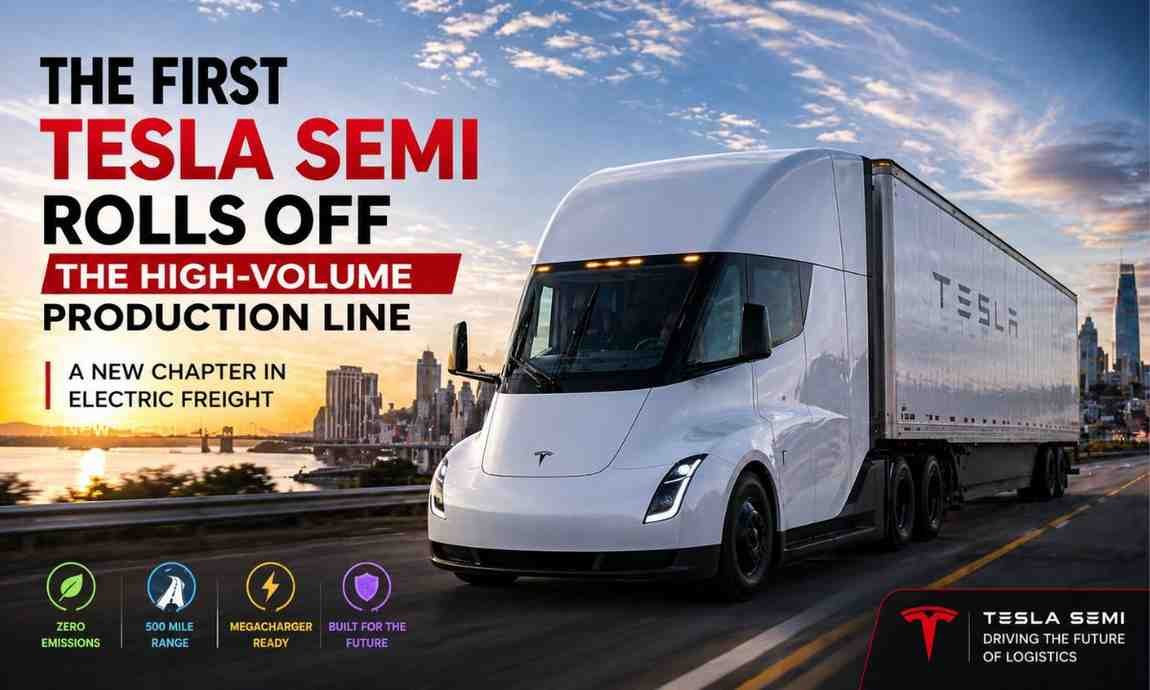
For decades, the rumble of diesel engines has defined the global trucking industry. But that familiar sound may soon fade into history. In a move that feels both futuristic and long overdue, the first Tesla Semi has officially rolled off the high-volume production line. This isn’t just another product launch—it’s a moment that could redefine how goods move across countries, economies, and continents. The era of electric freight is no longer a concept; it’s becoming a reality.
Mass Production of the Tesla Semi
The commencement of mass production for the Tesla Semi marks a monumental achievement—not only for Tesla but for the entire transportation sector. Since its launch in 2017, the Semi has been the subject of considerable discussion, delays, and intense scrutiny. Now, as production ramps up, Tesla is signaling that it is moving beyond mere promises and is ready for widespread adoption.
Initial deliveries to companies such as PepsiCo have yielded crucial insights into the vehicle’s real-world performance. These pilot programs have demonstrated that electric trucks can seamlessly handle even the most demanding logistics operations. With mass production now underway, Tesla aims to meet the growing demand from fleet operators eager to embrace clean energy solutions.
Performance That Challenges Diesel Dominance
One of the biggest selling points of the Tesla Semi is its performance. Unlike traditional diesel trucks, the Semi offers instant torque, smoother acceleration, and significantly reduced noise levels. Drivers who have experienced it often describe the ride as more responsive and less exhausting.
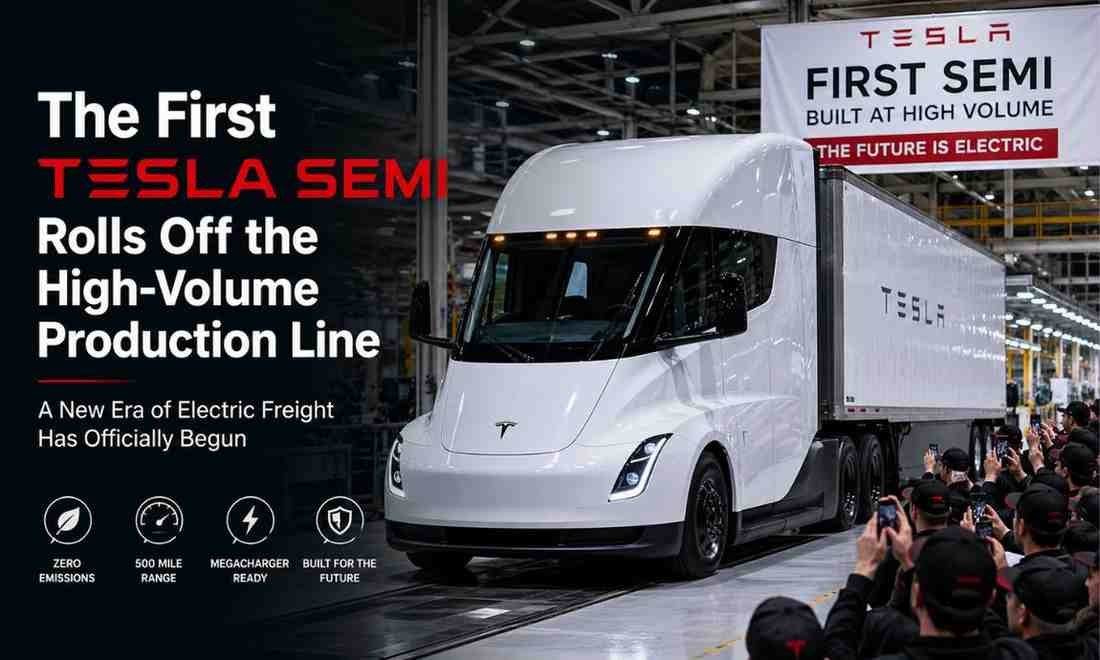
Tesla claims the Semi can achieve up to 500 miles of range on a single charge, depending on load and conditions. This makes it suitable for many long-haul routes without constant recharging stops. Paired with Tesla’s Megacharger network, the company is working to ensure that charging times remain practical for commercial use.
A Major Win for Sustainable Logistics
The environmental impact of Tesla’s semi-high-volume production cannot be overstated. Freight transport is one of the largest contributors to carbon emissions globally. Transitioning even a fraction of trucks to electric power could significantly reduce pollution levels.
As governments introduce stricter emission regulations and companies commit to sustainability goals, electric trucks are becoming increasingly attractive. The Tesla Semi offers businesses a way to cut emissions without sacrificing performance—an important balance in today’s climate-conscious world.
Challenges Still on the Road Ahead
Despite the excitement, the road to widespread adoption isn’t entirely smooth. High-volume production brings its own set of challenges. Battery supply chains must scale efficiently, and charging infrastructure needs rapid expansion to support long-haul operations.
Cost is another critical factor. While Tesla promotes a lower total cost of ownership due to savings on fuel and maintenance, the initial investment can still be high for many fleet operators. For widespread adoption, affordability and reliability will be just as important as innovation.
At the same time, competition is heating up. Traditional truck manufacturers and new startups alike are investing heavily in electric and alternative fuel technologies. Tesla may be leading the conversation, but it’s far from the only player in the race.
What This Means for the Future of Trucking
The launch of Tesla Semi’s high-volume production comes at a pivotal time. The global push toward electrification is accelerating, driven by environmental concerns, technological progress, and evolving consumer expectations.
This milestone is more than just a production update—it’s a signal that the trucking industry is entering a period of transformation. Electric vehicles are no longer limited to passenger cars; they’re expanding into heavy-duty sectors once thought impossible to electrify.
Conclusion
The Beginning of a Freight Revolution
The first Tesla Semi rolling off a high-volume production line marks the start of something bigger than a single product. It represents a shift in mindset, technology, and possibility.
While challenges remain, the direction is clear. Electric freight is no longer a distant vision—it’s happening now. As Tesla scales production and more companies adopt electric trucks, the ripple effects will reshape logistics, sustainability, and the global economy.
The highways of the future may look the same—but under the hood, everything is about to change.
Meta Description
Tesla Semi high-volume production begins, marking a major milestone in electric freight. Discover how this impacts logistics, sustainability, and the future of trucking.

Vikrant Singh is the Founder and Lead Editor of News US Media, where he covers U.S. news, sports, world affairs, and trending stories. With a focus on accurate reporting and in-depth research, he delivers timely, reader-friendly coverage that helps audiences stay informed about the latest developments in the United States and around the world. Through News US Media, he is committed to providing trustworthy journalism built on accuracy, credibility, and transparency.