









This outcome could help Democrats win four additional U.S. House seats in the tit-for-tat redistricting battle initiated by Texas.
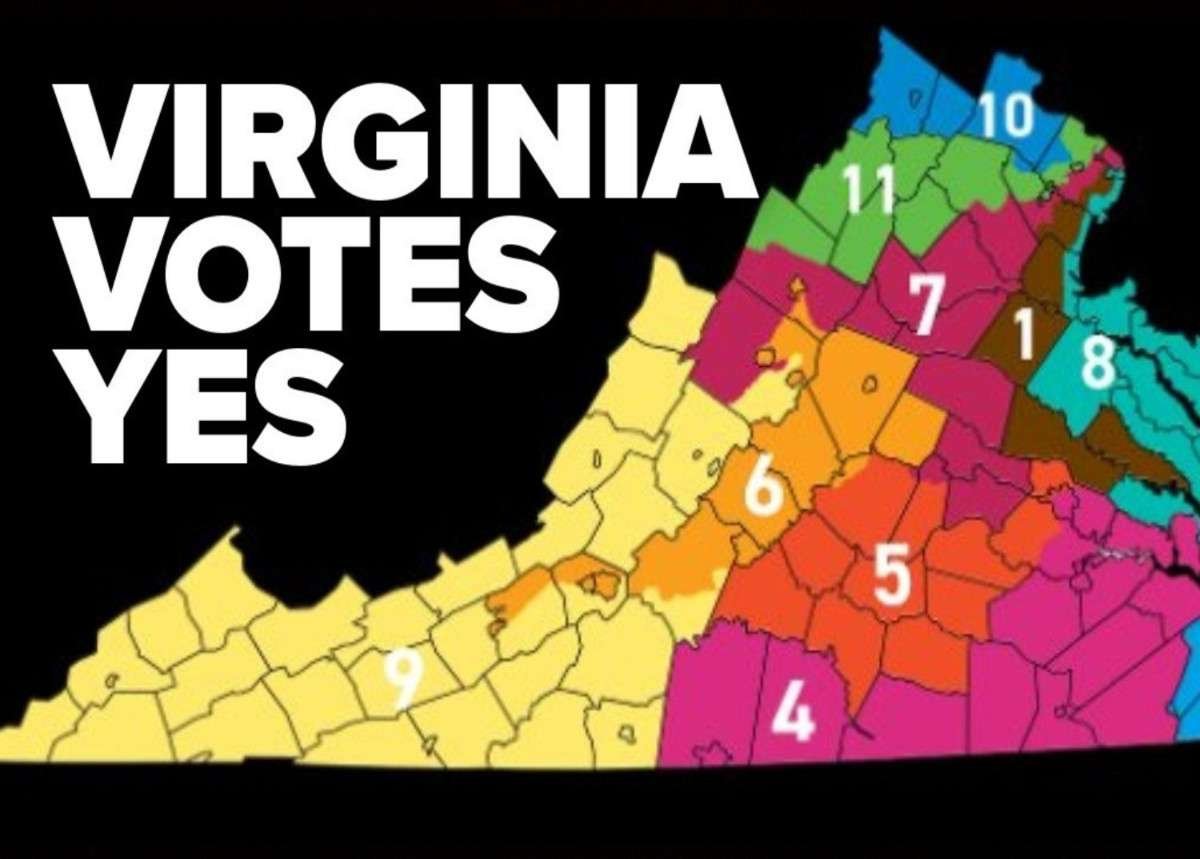
In the most recent setback to Donald Trump’s attempt to utilize mid-decade redistricting to maintain control of Congress, voters in Virginia approved new congressional maps on Tuesday that are meant to increase Democrats’ chances of regaining the House of Representatives.
In an attempt to remove up to five Democratic House MPs in the November midterm elections, Trump pushed Texas’s Republican-controlled legislature to redraw the state’s congressional lines, sparking the tit-for-tat redistricting dispute last year.
In retaliation, voters in California approved new maps that could change five Republican-held districts. In Virginia, newly elected Democratic governor Abigail Spanberger supported a plan to redraw her state’s borders after taking office in January. In November’s midterm elections, Democrats may gain four more House seats thanks to Tuesday’s referendum.
Democrats are now expected to win ten of Virginia’s eleven seats under the new redistricting. In the current delegation, Democrats hold six seats and Republicans five.
The state legislature must still approve the referendum a second time in order to amend the state constitution to exclude a nonpartisan redistricting process that voters adopted six years ago through the 2030 census.
The state supreme court is also considering a challenge to it, and it may still rule that the results are invalid.
In the weeks preceding Tuesday’s election, polls revealed a close contest, with indications that right-leaning voters in rural Virginia were enraged by new maps that would see many of them represented by politicians from the state’s northern suburbs outside of Washington, DC.
Voters’ opinions of Spanberger’s work as governor were also mixed, according to the surveys, with Republicans accusing her of lying on the campaign trail about her moderate credentials before swiftly shifting to the left as governor, notably by endorsing the referendum.
The contest featured considerable investment from Democratic-linked groups and others, who spent more than $64 million on the main committee supporting the referendum. Groups opposing redistricting brought in almost $30 million.
Barack Obama filmed television commercials supporting the yes vote, but those opposed ran their own advertisements that highlighted his criticism of gerrymandering in the past. The Republican governor before Spanberger, Glenn Youngkin, actively promoted the no vote.
Obama celebrated the result on Tuesday evening.
“Congratulations, Virginia,” the former US president wrote on social media. Although they haven’t succeeded yet, Republicans are attempting to sway the midterm elections in their favor. We appreciate you demonstrating to us what it means to defend and defend our democracy.
The Republican-controlled Florida state assembly, which Governor Ron DeSantis has invited into a special session starting next month to discuss changes to its congressional layout, may feel more confident as a result of the referendum’s victory. Depending on how the legislature draws the lines, the GOP might gain up to three additional seats.
The Democratic leader of the House, Hakeem Jeffries, stated that DeSantis should take note of the outcome on Tuesday.
He wrote in a statement, “If Florida Republicans continue with this illegal scheme, they will only create more prime pick-up opportunities for Democrats.” “We are ready to face them all, and we are ready to prevail.”
Along with Virginia, the congressional maps of Missouri and North Carolina have also been revised, possibly eliminating one Democratic representative each. Due to a court decision requiring the state to redraw its borders, Democrats are also anticipated to gain a seat in Utah.
An amazing self-own
John Scott, the son of renowned editor and late Guardian owner CP Scott, did something unprecedented for a media heir in 1936: he gave up his share for the sake of society.
After inheriting the Guardian, which was valued at £1 million at the time and around £62 million now, Scott gave up all financial gain, except his salary, and transferred ownership to the newly established Scott Trust. The Trust’s primary goal would become ensuring the Guardian’s editorial and financial independence for all time.
That means the Guardian can’t be bought. Not by a conglomerate, not by private equity, and most surely not by a millionaire seeking a political soapbox. Here are three compelling arguments for choosing to help us right now.
- At a time when the wealthy and powerful are getting away with more and more, our investigative, high-caliber media is a scrutinizing force.
- Your money directly powers our reporting since we are independent and don’t have a rich owner regulating what we do.
- It is inexpensive and requires less time than reading this letter.
Because of this special strategy, we also rely on Indian readers like you to support our work. We can speak what we want, report on who we want, confront who we want, and rise up when others are seated because we are independent. You know what to do if you would rather that journalists and editors, rather than shareholders or extremely wealthy tech dudes, make the decisions that determine the news you read: Contribute to the Guardian every month.

Vikrant Singh is the Founder and Lead Editor of News US Media, where he covers U.S. news, sports, world affairs, and trending stories. With a focus on accurate reporting and in-depth research, he delivers timely, reader-friendly coverage that helps audiences stay informed about the latest developments in the United States and around the world. Through News US Media, he is committed to providing trustworthy journalism built on accuracy, credibility, and transparency.