









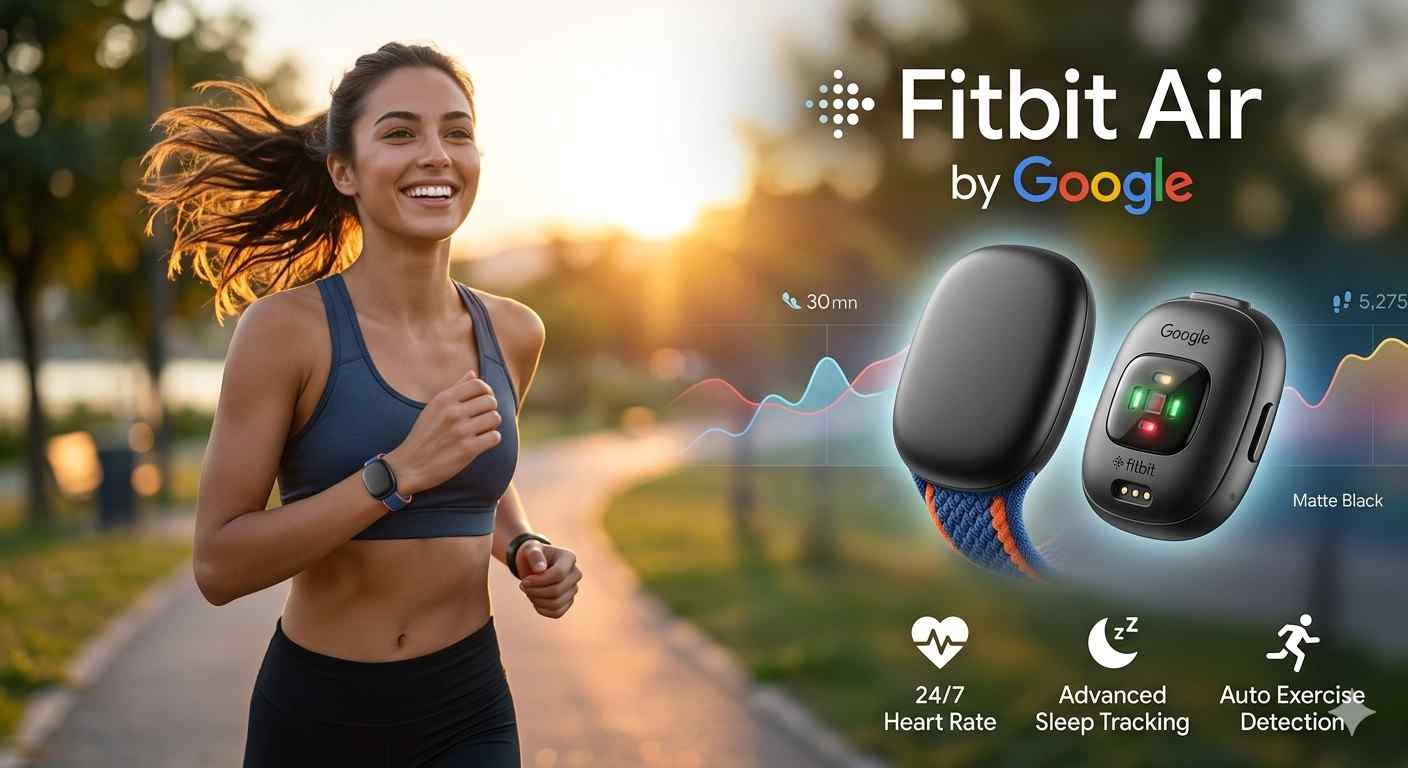
Discover everything about the new Google Fitbit Air, the AI-powered screenless fitness wearable inspired by Whoop. Learn about features, battery life, AI coaching, pricing, comfort, and whether it’s worth buying in 2026.
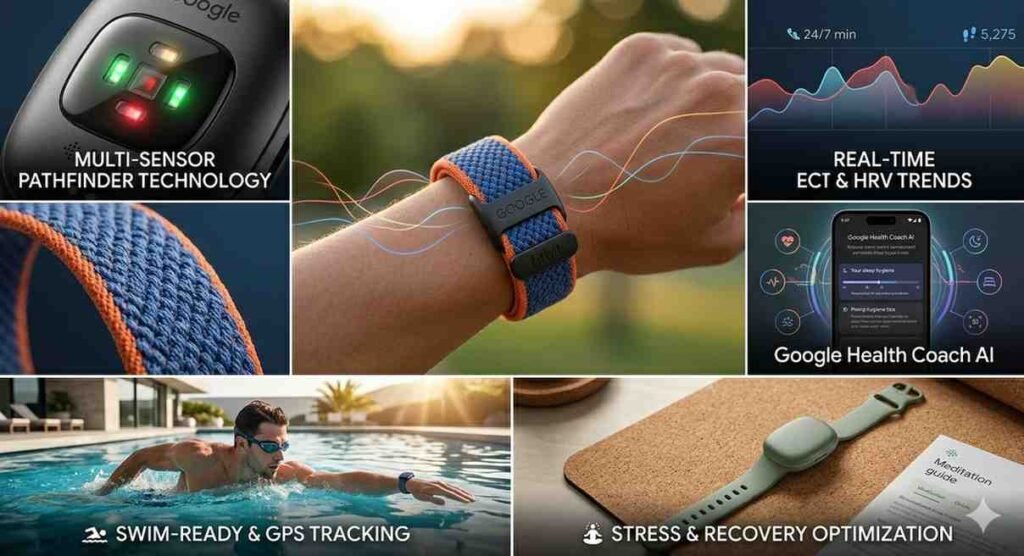
Google has officially entered the next generation of wearable fitness technology with the launch of the Google Fitbit Air, a compact, screenless, AI-powered fitness tracker designed to compete directly with wearable brands like Whoop. After teasing the device earlier this year, Google has now unveiled the Fitbit Air with a fresh vision for health tracking — one focused on comfort, AI insights, and all-day passive monitoring.
Unlike traditional smartwatches packed with displays and notifications, the Fitbit Air takes a minimalist approach. It quietly collects health and activity data in the background while delivering personalized insights through Google’s AI-driven Health Coach. With a lightweight design, multiple band options, and advanced machine learning features, Google is betting that users want a smarter wearable without the distractions of a smartwatch.
Here’s everything you need to know about the Google Fitbit Air, including features, pricing, battery life, AI tools, and why it could become one of the biggest fitness wearables of 2026.
What Is the Google Fitbit Air?
The Google Fitbit Air is a screenless wearable fitness tracker designed for users who want advanced health insights without wearing a bulky smartwatch. The tracker itself is tiny and removable, allowing users to insert it into different accessories such as wristbands and future wearable options.
Google says the Fitbit Air is:
- 25% smaller than the Fitbit Luxe
- 50% smaller than the Fitbit Inspire 3
- Extremely lightweight at just 5.2 grams without a band
This compact design makes it feel more like a health sensor than a traditional fitness tracker.
The wearable is available for pre-order at $100, while a special edition designed with NBA superstar Stephen Curry costs $130.
A Comfortable Wearable Designed for 24/7 Use
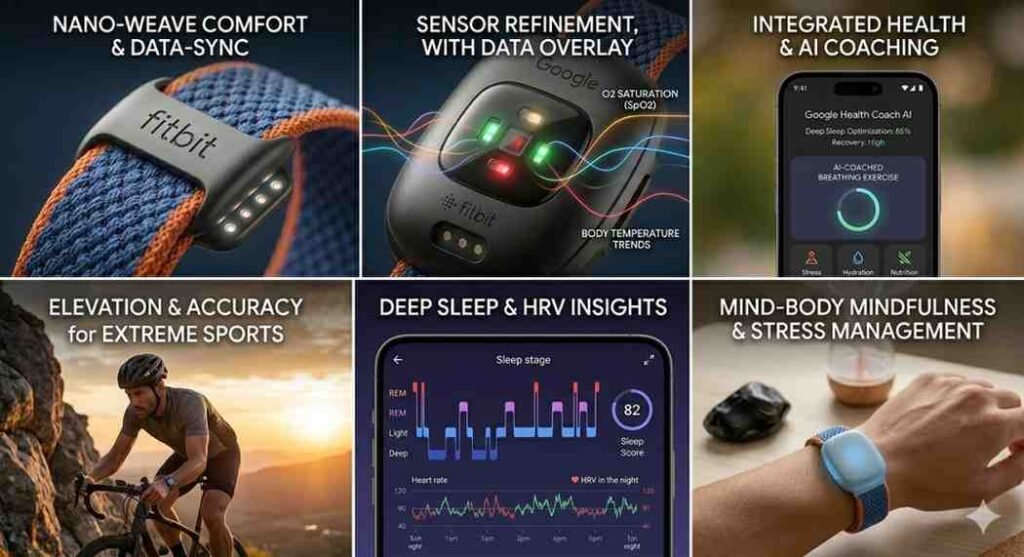
One of the biggest selling points of the Fitbit Air is comfort. Google claims the wearable was rated more comfortable than competing fitness trackers in an independent consumer study.
Because it lacks a screen, buttons, and heavy hardware, the Fitbit Air is built to disappear into your daily routine. Whether you’re sleeping, working, exercising, or traveling, the device is designed to stay unnoticed while continuously tracking your health data.
Google currently offers three band styles:
| Band Type | Features | Best For |
| Performance Loop Band | Micro-adjustable fit | Everyday comfort |
| Active Silicone Band | Sweatproof and water-resistant | Workouts and sports |
| Elevated Modern Band | Stylish bracelet-style design | Fashion and casual wear |
Google also confirmed that more accessory options may arrive in the future, including chest straps and alternative wear styles.
Advanced Health Tracking Features
Despite its tiny size, the Google Fitbit Air includes a surprisingly large number of health-tracking capabilities.
Heart Rate Monitoring
The Fitbit Air continuously tracks your heart rate throughout the day and night. Google uses upgraded machine learning algorithms to provide more accurate readings and recovery analysis.
The device also supports:
- Resting heart rate tracking
- Heart rate variability (HRV)
- Cardio load monitoring
- Recovery readiness insights
Sleep Tracking and Smart Wake
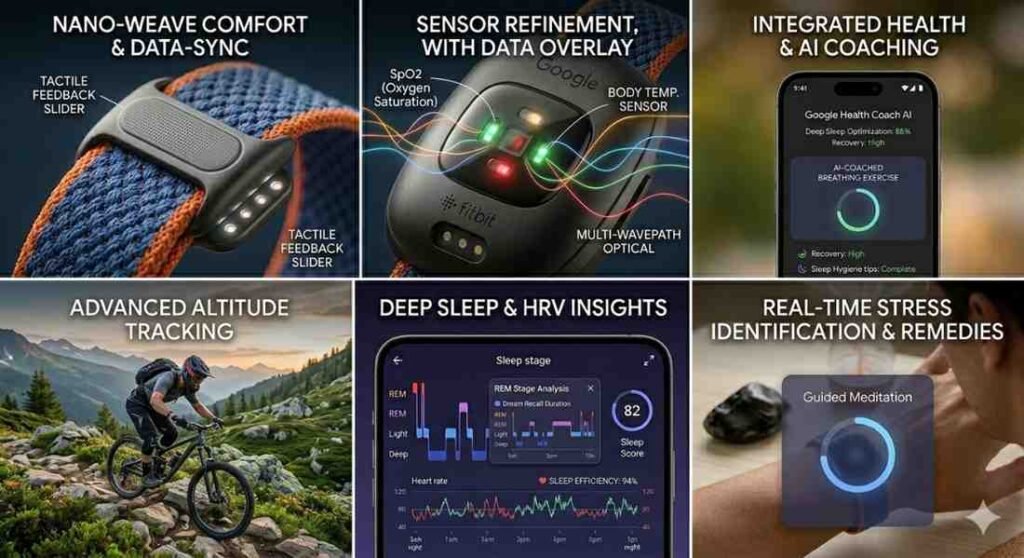
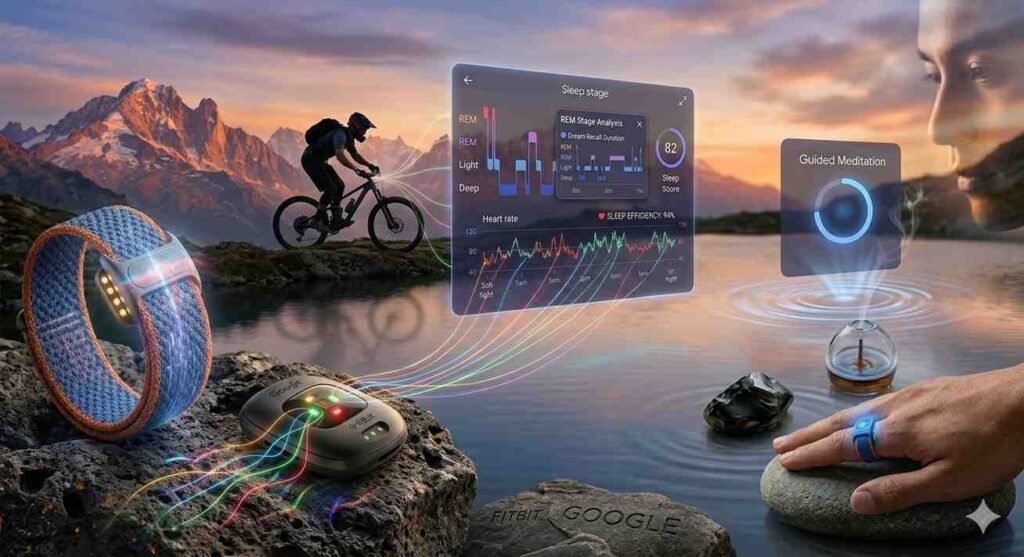
Sleep tracking remains one of Fitbit’s strongest features, and the Air improves on that foundation.
The wearable can track:
- Sleep duration
- Light sleep
- Deep sleep
- REM sleep
- Sleep Score
Google says its updated AI models improve the Sleep Score system to better reflect physical recovery and overall wellness.
The Fitbit Air also includes Smart Wake functionality. Using subtle vibration alerts, the device wakes users during an optimal stage of their sleep cycle to help them feel more refreshed.
AFib Detection and Wellness Monitoring
The Fitbit Air can detect signs of irregular heart rhythms associated with AFib (Atrial Fibrillation). This feature helps users identify potential heart health concerns earlier.
Additionally, the wearable provides wellness insights based on HRV and recovery patterns, helping users understand stress, fatigue, and overall physical condition.
Automatic Workout Tracking
One of the most convenient features of the Fitbit Air is automatic workout detection. Since there’s no screen or buttons, users don’t need to manually start every exercise session.
The device can automatically detect activities such as:
- Running
- Walking
- Outdoor cycling
- Stationary biking
- Rowing
- Elliptical training
- High-heart-rate workouts
Users can also manually log approximately 40 activities inside the Fitbit app, including:
- Yoga
- Dancing
- Kickboxing
- Aerobics
- Canoeing
- Circuit training
Additionally, the app supports more than 140 activity types for manual tracking, including cricket, badminton, archery, curling, and even household chores.
AI Features: Google Health Coach
The biggest highlight of the Fitbit Air is its integration with Google’s AI ecosystem.
At the center of the experience is Google Health Coach, a Gemini-powered AI assistant built directly into the Google Health app.
The AI coach can:
- Analyze fitness and sleep data
- Create personalized workout plans
- Offer recovery recommendations
- Adapt suggestions based on your schedule
- Provide real-time wellness insights
Google says the AI can even work with cycle health information and other medical-related data to deliver more personalized health recommendations.
This makes the Fitbit Air much more than a standard fitness tracker — it becomes an AI-driven wellness companion.
Battery Life and Charging
Battery life is another major strength of the Fitbit Air.
According to Google:
| Feature | Details |
| Battery Life | Up to 7 days |
| Fast Charging | 1 day of use in 5 minutes |
| Full Charging Time | Around 90 minutes |
| Water Resistance | Up to 50 meters |
The device also uses a magnetic bi-directional charger similar to the Pixel Watch 4, making charging easier and more convenient.

Fitbit Air vs Whoop: Key Differences
The Fitbit Air clearly targets users interested in wearable recovery tracking devices like Whoop. However, there are several important differences.
| Feature | Google Fitbit Air | Whoop |
| Screen | No | No |
| AI Coaching | Gemini-powered | Limited AI insights |
| Subscription Required | Includes 3-month premium | Subscription mandatory |
| Price | Starts at $100 | Higher long-term cost |
| Battery Life | Up to 7 days | Around 5 days |
| Sleep Tracking | Advanced | Advanced |
| Workout Detection | Automatic | Automatic |
Google’s biggest advantage may be affordability combined with AI integration.
Special Edition With Stephen Curry
Google also introduced a premium Fitbit Air Special Edition created in collaboration with Stephen Curry.
The special model includes:
- Signature Curry styling
- Increased airflow design
- Extra water-resistant coating
The special edition costs $130 and includes three months of Google Health Premium.
Is the Google Fitbit Air Worth Buying?
The Google Fitbit Air looks like one of the most exciting fitness wearables launched in 2026. Instead of trying to compete directly with smartwatches, Google focused on creating a lightweight, AI-powered health companion designed for continuous wear.
The device stands out because of:
- Comfortable screenless design
- AI-powered health coaching
- Improved sleep and recovery insights
- Strong battery life
- Affordable pricing
For users who want deep wellness tracking without constant notifications and distractions, the Fitbit Air could be an excellent choice.
It also signals a larger trend in wearable technology — a future where AI-driven health insights matter more than screens and apps.
Final Thoughts
The Google Fitbit Air combines Fitbit’s health-tracking expertise with Google’s rapidly growing AI ecosystem. The result is a sleek, lightweight wearable focused on recovery, sleep, wellness, and personalized coaching.
As AI becomes increasingly integrated into health technology, devices like the Fitbit Air may represent the future of wearable fitness tracking.
With a competitive starting price, comfortable design, and powerful AI capabilities, the Google Fitbit Air could quickly become one of the most talked-about wearables of the year.

Vikrant Singh is the Founder and Lead Editor of News US Media, where he covers U.S. news, sports, world affairs, and trending stories. With a focus on accurate reporting and in-depth research, he delivers timely, reader-friendly coverage that helps audiences stay informed about the latest developments in the United States and around the world. Through News US Media, he is committed to providing trustworthy journalism built on accuracy, credibility, and transparency.